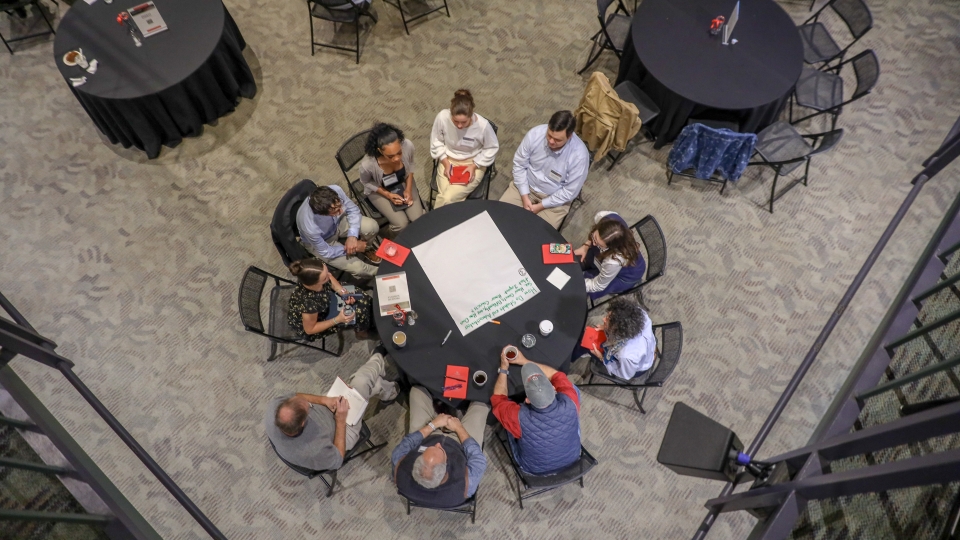
Davidson College brought representatives from 14 schools together to discuss how honor councils should respond to artificial intelligence in students’ academic work.
The college’s Nov. 9 account describes a debate over AI restrictions, rather than an announcement that Davidson had changed its classroom rules. The gathering was its third annual Convening of Honor Councils.
Keynote speaker Tricia Bertram Gallant questioned bans on AI use during unproctored assignments, including take-home tests. She said such restrictions can disadvantage students who comply when classmates use AI anyway.
Bertram Gallant directs the Academic Integrity Office and Triton Testing Center at the University of California, San Diego. Her proposal distinguished work completed without supervision from proctored testing, where AI bans could remain.
The college reported that 39 students attended the convening. Another 26 faculty, staff members and guests participated. Davidson’s Neely and Jack Purcell Program on Ethics, Honor and Leadership hosted the event with support from Wake Forest University’s Educating Character Initiative.
Hugh Lee, the Purcell Program’s director and a 1989 Davidson graduate, coordinated the gathering. P. Anand Rao, founding director of the Center for AI and the Liberal Arts at the University of Mary Washington, also spoke.
The discussion focused on what honor councils can do as schools set expectations for AI. Bertram Gallant suggested helping instructors make syllabus rules clearer, using responses to violations to develop ethical judgment and teaching responsible AI use.
Her examples included asking students to examine their justifications for cheating and helping them raise concerns about classroom rules. Those were recommendations presented at the convening, not newly adopted requirements for Davidson courses.
The distinction matters because Davidson’s published Honor Code already makes students responsible for knowing and following additional guidelines established by their professors. The code prohibits cheating and plagiarism, including presenting another person’s ideas or words as one’s own.
The college describes take-home tests and unproctored, self-scheduled final exams among the freedoms associated with its honor system. Its Honor Code page traces the tradition to Davidson’s founding in 1837 and the council’s current form to 1959.
Charlotte Frampton, vice chair of Davidson’s Honor Council, emphasized trust between students and faculty in the college’s event account. Participants also discussed how campus honor systems can help students develop habits that extend beyond individual assignments.
For Davidson students, the published code and the requirements for each course remain the relevant guidance. The convening offered competing approaches to AI policy without establishing a blanket permission to use AI on coursework.