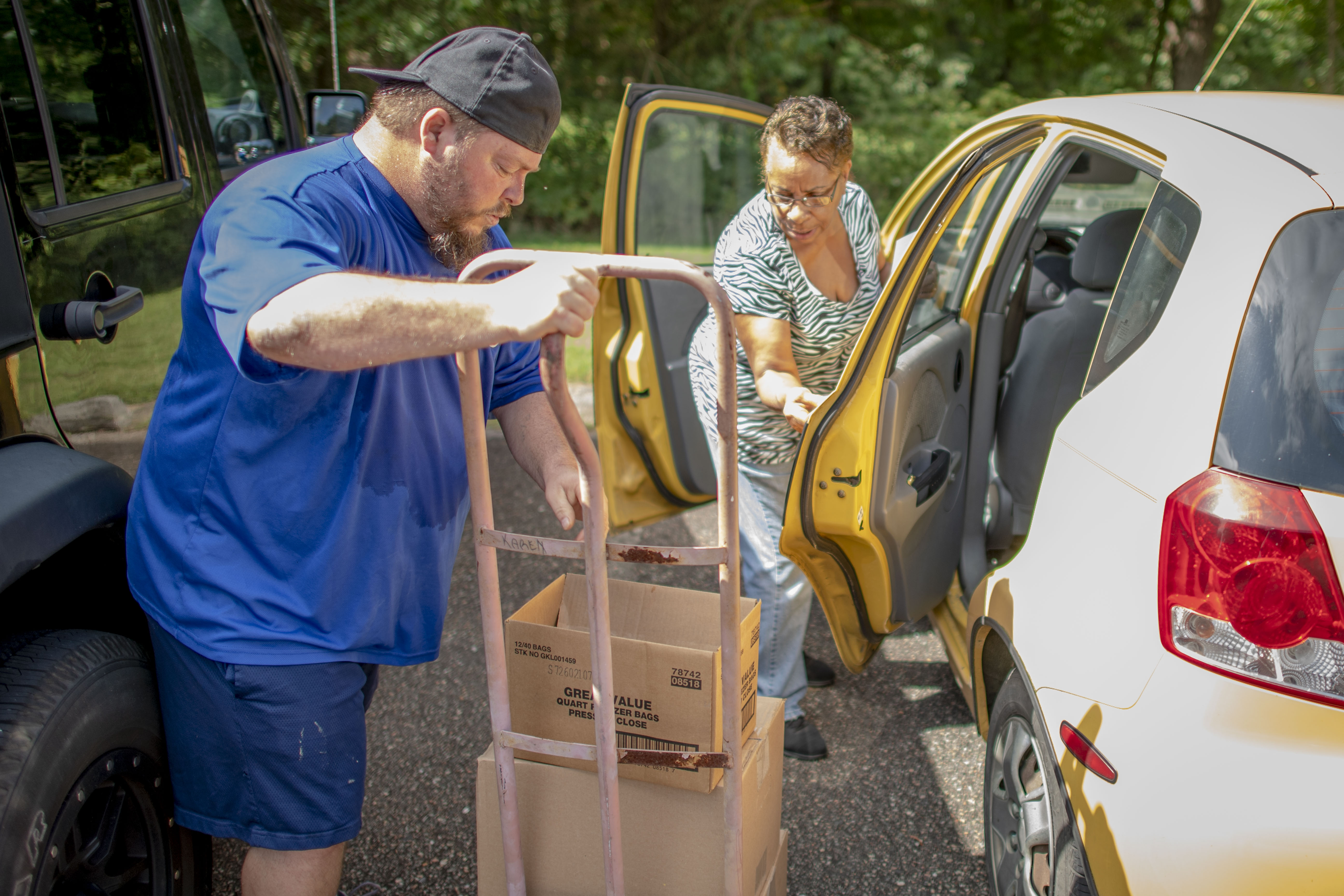
About 23,000 fewer Mecklenburg County residents receive SNAP food benefits compared to mid-2025, and local food pantries are serving far more people as a result.
SNAP participation in the county averaged 151,606 during the fiscal year ending June 2025, according to Ellese Massey, assistant division director for Mecklenburg County's Department of Community Resources. That number fell to an average of 138,101 the following fiscal year and has averaged 128,596 since July 2026, as first reported by the Charlotte Ledger.
The decline follows the One Big Beautiful Bill Act, signed into law in July 2025, which expanded SNAP work requirements to adults ages 55 to 64. Those requirements took effect Dec. 1, 2025. Eligible adults must now log at least 80 hours per month of work, volunteering or job training to keep their benefits, with exemptions for medical conditions, disabilities, caregiving and pregnancy.
Then on Oct. 1, the federal government cut its share of SNAP administrative costs from 50% to 25%, shifting millions more in expenses to North Carolina and its counties, WCNC reported.
Massey cautioned that not all of the participation decline stems from the new law. Economic conditions and other factors also play a role. But the county confirmed that a significant number of residents who previously qualified are no longer eligible.
Applications have not dropped.
People are still seeking help, Massey said, even as fewer receive benefits. That growing need is visible at pantry doors across the region, including in the Lake Norman area.
Nourish Up, which operates 41 food pantries in the Charlotte area including one at the Ada Jenkins Center in Davidson, served 38,718 people through its Food Shares program in August 2026. That is an 83% jump from the roughly 21,000 it served in August 2025, according to CEO Tina Postel. The nonprofit expanded Food Shares distributions from about once a week to three times a week to keep up.
At the same time, Nourish Up has seen a 50% reduction in food from the federal Emergency Food Assistance Program, forcing it to purchase more groceries, Postel said.
"Our lines have tripled. We're up to 200 participants a day," Janette Kinard, executive director of Champion House of Care's Project One food distribution program, told WCNC.
Recertification has also gotten harder for recipients. Under the new federal law, SNAP participants must recertify every six months instead of annually, according to Karina Barnes, a benefits navigator with Charlotte Center for Legal Advocacy. That organization previously had 12 benefits navigators but now has three after funding cuts, reducing the number of healthcare enrollment appointments it can handle by more than 80%, Barnes said.
Mecklenburg County Manager Mike Bryant said in a Sept. 9 statement that the county launched an educational campaign to help residents navigate the changes. Residents who receive SNAP should keep their address and phone number current with the county, respond to every notice by its deadline and document work or volunteer hours.
More changes loom. Medicaid work requirements for recipients ages 19 through 64 take effect Jan. 1, 2027. More than 345,600 North Carolinians are expected to fall off the Medicaid rolls under the new age restrictions, according to NC Health News.
Residents in Davidson, Cornelius and Huntersville who need food assistance can visit the Nourish Up pantry at the Ada Jenkins Center. County information on SNAP and Medicaid eligibility changes is available at the Mecklenburg County Department of Community Resources website.