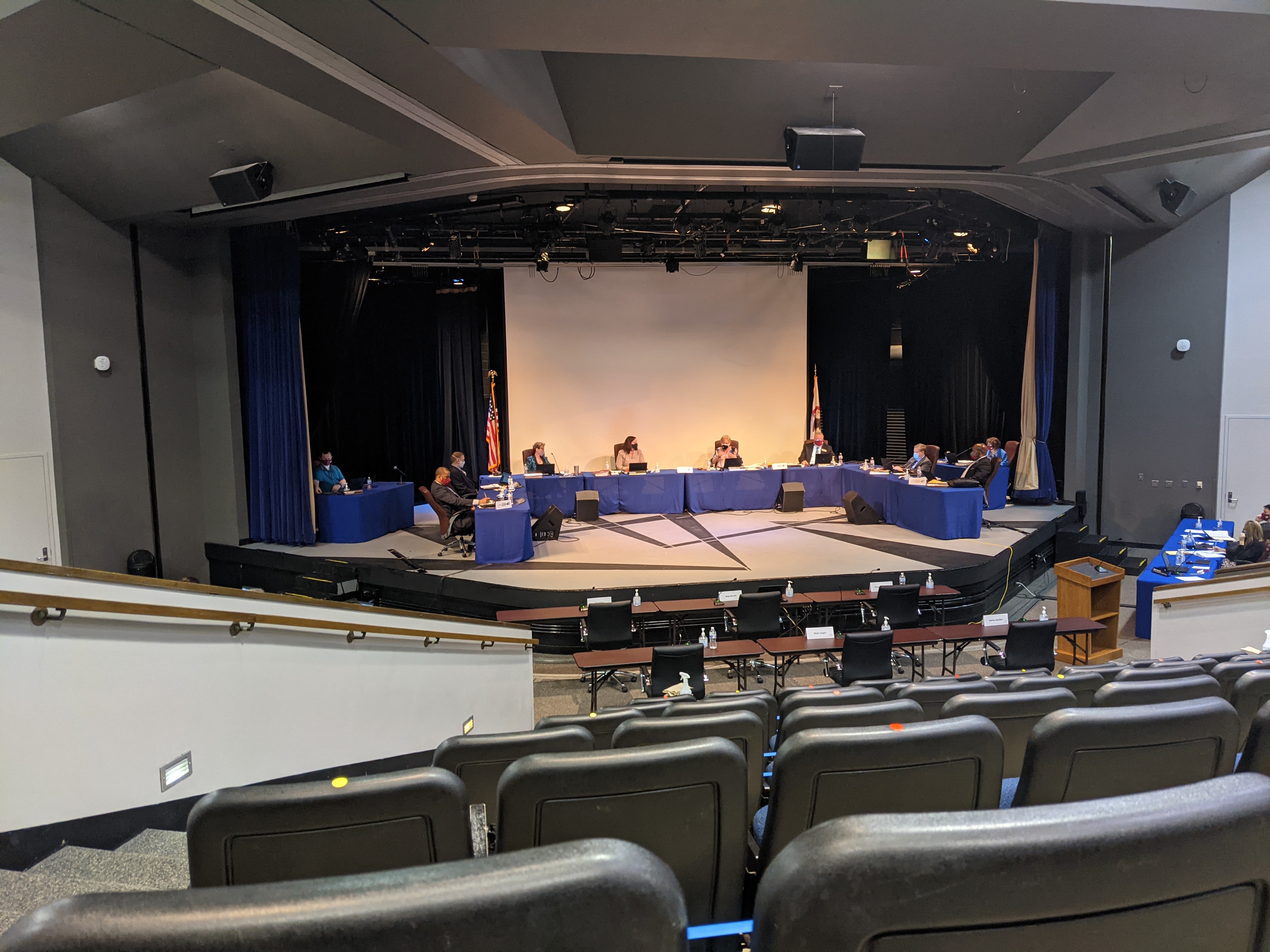
North Carolina's whistleblower statute could give fired Charlotte-Mecklenburg Schools Superintendent Crystal Hill legal grounds to challenge her Tuesday, Sept. 22 termination, even though her contract included a broad waiver of claims against the board.
The question, first raised by WFAE, centers on whether state law overrides the severance clause Hill signed. Her contract allowed the board to fire her "for convenience" in exchange for one year's salary, roughly $340,000, but also required her to forfeit the right to file any claim against the board, its officers or members.
The state's whistleblower protection law, Article 14 of GS Chapter 126, bars any state agency head from firing or retaliating against an employee who reports fraud, misappropriation, gross mismanagement or gross abuse of authority. The UNC School of Government has said the statute covers public school employees by virtue of GS 126-5(c5), according to WFAE's reporting.
Hill sent a roughly 200-page memo to the board the week of Thursday, Sept. 17, alleging that former board chair Stephanie Sneed engineered a plan for consultant Raki McGregor to be paid $30,000 a month for a year by outside law firm Poyner Spruill without Hill's knowledge. The board, including Sneed, voted 5-4 to fire Hill one week later.
For north Mecklenburg families in the Cornelius, Davidson and Huntersville zone represented by District 1 board member Charlitta Hatch, the legal question adds another layer to a sequence that has included a suspension, an investigation, a reinstatement and a firing since June. Hatch voted to fire Hill and brought the termination motion. In an email to CMS acting general counsel on Sept. 22, before the vote, Hatch wrote that she struggled with the board's reluctance to share its own account of events, according to WFAE's reporting.
The U.S. Equal Employment Opportunity Commission (EEOC) has said employers have "non-waivable rights" that cannot be forfeited in an employment agreement, WFAE reported. Whether North Carolina's whistleblower protections qualify as non-waivable has not been tested in court in this context.
A board-led investigation cleared Hill of wrongdoing five weeks before her firing. She was reinstated Tuesday, Aug. 11 after a two-month suspension, only to be terminated six weeks later. The combined cost to taxpayers tops $700,000: nearly $380,000 for the investigation and approximately $340,000 in severance. Board member Monty Witherspoon, who voted against the firing, called the situation "a governance failure," Queen City News reported on Wednesday, Sept. 23.
The question is untested. Hill has not publicly said whether she intends to pursue legal action.
If Hill were to file a whistleblower claim under GS 126-86, she would have one year from the alleged violation. Remedies under the statute include reinstatement, back wages and, for willful violations, triple actual damages plus attorney's fees.
The SBI and State Auditor Dave Boliek are separately investigating financial irregularities at CMS. Boliek said Wednesday, Sept. 23 that his office is reviewing budget materials, contracts and financial documents in coordination with the SBI.
As we reported Sept. 28, the board is expected to vote this week on creating a superintendent search committee. Acting Superintendent Melissa Balknight plans to retire Jan. 1, 2027.